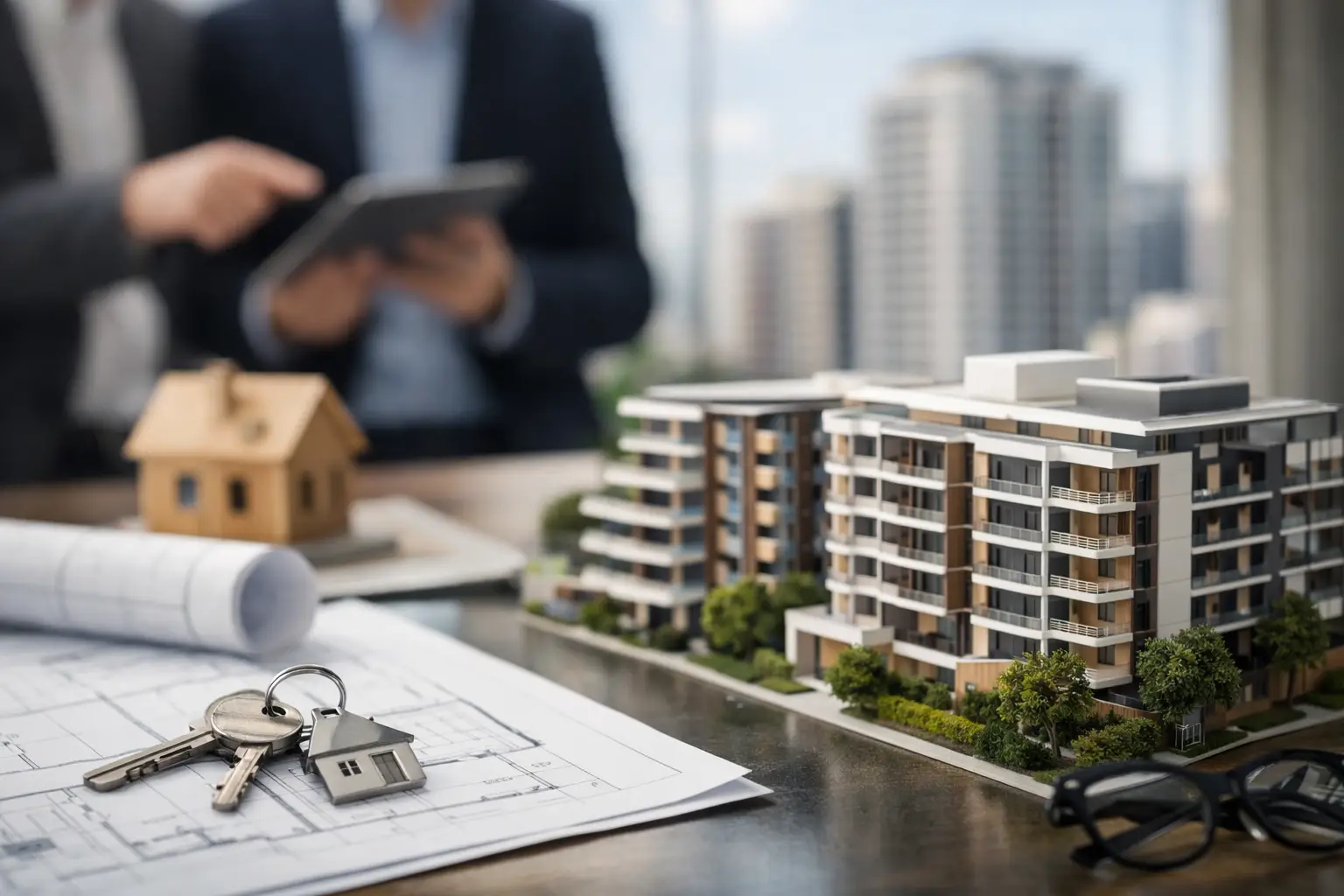
A display suite can make a future apartment feel close enough to touch: polished stone, styled furniture, city views framed on a screen. But what is an off-the-plan apartment in practical terms? It is a home you agree to buy before it has been built, usually from architectural plans, renders and a proposed schedule of finishes.
For many Australian buyers, buying off the plan can be a way to secure a new home in a preferred location before prices move further. For others, it is an investment decision based on rental demand and future supply. Either way, you are committing to a contract today for a property that may not settle for two or more years. That time gap creates opportunities, but it also demands careful due diligence.
What is an off-the-plan apartment?
An off-the-plan apartment is a unit purchased before construction is complete, and often before work has started on site. You choose a specific lot within a proposed development and sign a contract based on the developer's plans and specifications.
At settlement, you receive the completed apartment and its title is transferred into your name. Until then, the final building, common areas, outlook and even the apartment's dimensions are subject to the contract terms and approved plans.
This differs from buying an established apartment, where you can inspect the exact property, review the owners corporation records and generally settle within a much shorter period. With off-the-plan property, you are assessing the developer, the documents and the location as much as the apartment itself.
How buying off the plan works
The process starts when a developer releases apartments for sale. Buyers review the plans, pricing, inclusions and contract, then pay a deposit if they proceed. The deposit is commonly 10 per cent, although arrangements vary by project and state or territory. It should be held in the required trust or stakeholder account under the contract, rather than treated as an early payment to the developer.
Construction then begins or continues. During this period, the developer may provide progress updates, but the completion date is usually an estimate rather than a fixed promise. the building is complete, a final inspection is arranged and settlement follows after the necessary titles and approvals are in place.
The period between exchange and settlement is often the defining feature of an off-the-plan purchase. It can give buyers longer to save, organise finance and plan a move. It can also expose them to changing interest rates, lending policies and market conditions.
What you are actually buying
The contract should identify the lot number, car space, storage cage if included, floor plan, proposed area and schedule of finishes. It may also set out the developer's rights to make changes. Small variations are common in construction, but buyers need to understand what level of change is permitted.
A kitchen render is not a guarantee of a particular brand, colour or layout unless the contract and specifications say so. Check the detail behind phrases such as “or similar”, “subject to availability” and “at the developer's discretion”. They are not automatically a problem, but they matter when comparing value between projects.
Why buyers choose off-the-plan apartments
The appeal is straightforward. New apartments generally come with modern layouts, new appliances, energy-efficient features and lower immediate maintenance needs than older stock. Depending on the project, buyers may also access facilities such as a gym, concierge, rooftop space or shared work areas.
Buying early may allow you to choose from a wider selection of levels, aspects, layouts and parking options. In a strong market, the agreed purchase price may look favourable by the time the building is ready. First-home buyers may also be eligible for government concessions or schemes, depending on the state or territory, the price and their circumstances.
Investors are often drawn to depreciation benefits associated with new builds and the potential appeal of a fresh apartment to tenants. But these benefits should not be the sole reason to buy. Rental returns, vacancy risk, body corporate fees and competing new supply in the area all need to stack up.
The trade-offs to understand before you sign
Off-the-plan buying is not simply buying a new apartment early. It involves risks that are less visible than those attached to an established property.
The first is delay. Weather, labour shortages, material costs, approvals and builder capacity can all affect completion. A delayed settlement can disrupt moving plans, rental arrangements and finance approvals. Ask for the anticipated completion window, but also read the sunset clause. This clause sets the date by which the contract may be ended if the development has not completed. Its wording, and the rights each party has under it, deserve legal advice.
The second is valuation risk. Your lender will usually value the completed apartment close to settlement, not when you signed the contract. If the valuation comes in below the purchase price, the bank may lend less than expected. You may need to contribute more cash, renegotiate finance if possible, or risk defaulting under the contract.
There is also market risk. Values can rise during construction, but they can fall too. This is particularly relevant where several large projects are due to settle around the same time, increasing the number of similar apartments for sale or rent.
Finally, the finished result may differ from the display suite. Your view could change if another approved building rises nearby. Light, noise, construction quality, storage, lift waiting times and the feel of the common areas become fully clear when the building is complete.
Due diligence for an off-the-plan apartment
Before committing, engage a solicitor or conveyancer experienced in off-the-plan contracts. These contracts are usually more detailed than standard established-property contracts and are written to deal with a project that is still evolving. Independent advice is essential.
Ask your adviser to focus on the deposit arrangements, permitted plan changes, inclusions, cooling-off rights, sunset clause, defects process and what happens if the developer cannot complete. They should also explain your obligations if your finance is not approved at settlement. A finance clause is not always available in off-the-plan sales, so do not assume you can walk away without consequences.
Research the developer and builder separately. Look at completed projects, not current marketing material. If possible, inspect previous buildings, speak with owners or local agents, and consider whether the projects have held up well over time. A strong developer can still face construction challenges, but a credible track record is useful evidence.
Check the location with the same discipline you would apply to an existing home. Visit at different times, assess transport and daily amenities, and search for nearby planning proposals. Consider the practical details: access to parking, school catchments, future construction noise and whether the area has a large pipeline of apartments.
For investors, be conservative with projected rent. Compare current rental listings, recent leased results and the number of similar new apartments likely to hit the market at settlement. For owner-occupiers, consider whether the floor plan will still work for your household in three to five years, not just on inspection-day excitement.
Finance, deposits and settlement planning
A pre-approval can be helpful, but it is not a guarantee that your lender will finance the property at settlement. Your income, expenses, interest rates and the lender's policy may all change during the build period. Speak with your broker or lender well before the expected completion date, then check in again as settlement approaches.
Keep funds aside beyond the deposit. You may need to cover stamp duty, legal costs, lender fees, moving costs and any valuation shortfall. Eligibility for stamp duty concessions and first-home buyer support differs across Australia and can change, so confirm the current rules for your state or territory before relying on them.
At the final inspection, look carefully for defects or incomplete work. Cosmetic issues such as chipped tiles or marked paint are easier to identify then, but also test doors, taps, appliances, power points, windows and storage. Your contract and state-based building rules will shape the process for rectifying defects, so document concerns clearly and raise them promptly.
Is buying off the plan right for you?
An off-the-plan apartment can suit a buyer who values a new home, has flexibility on timing and can comfortably manage changes to finance or market conditions. It can be less suitable if you need to move by a fixed date, have a tight deposit buffer or want certainty about the exact outlook and finished quality before committing.
The right purchase is rarely determined by a glossy render or an early-bird incentive. It comes down to the contract, the people delivering the project, the local market and your capacity to settle when the apartment is ready. Use property listings, sold results and suburb research to test the asking price against the wider market, then get independent legal and financial advice before signing. A well-researched decision now gives you far more control when settlement day arrives.