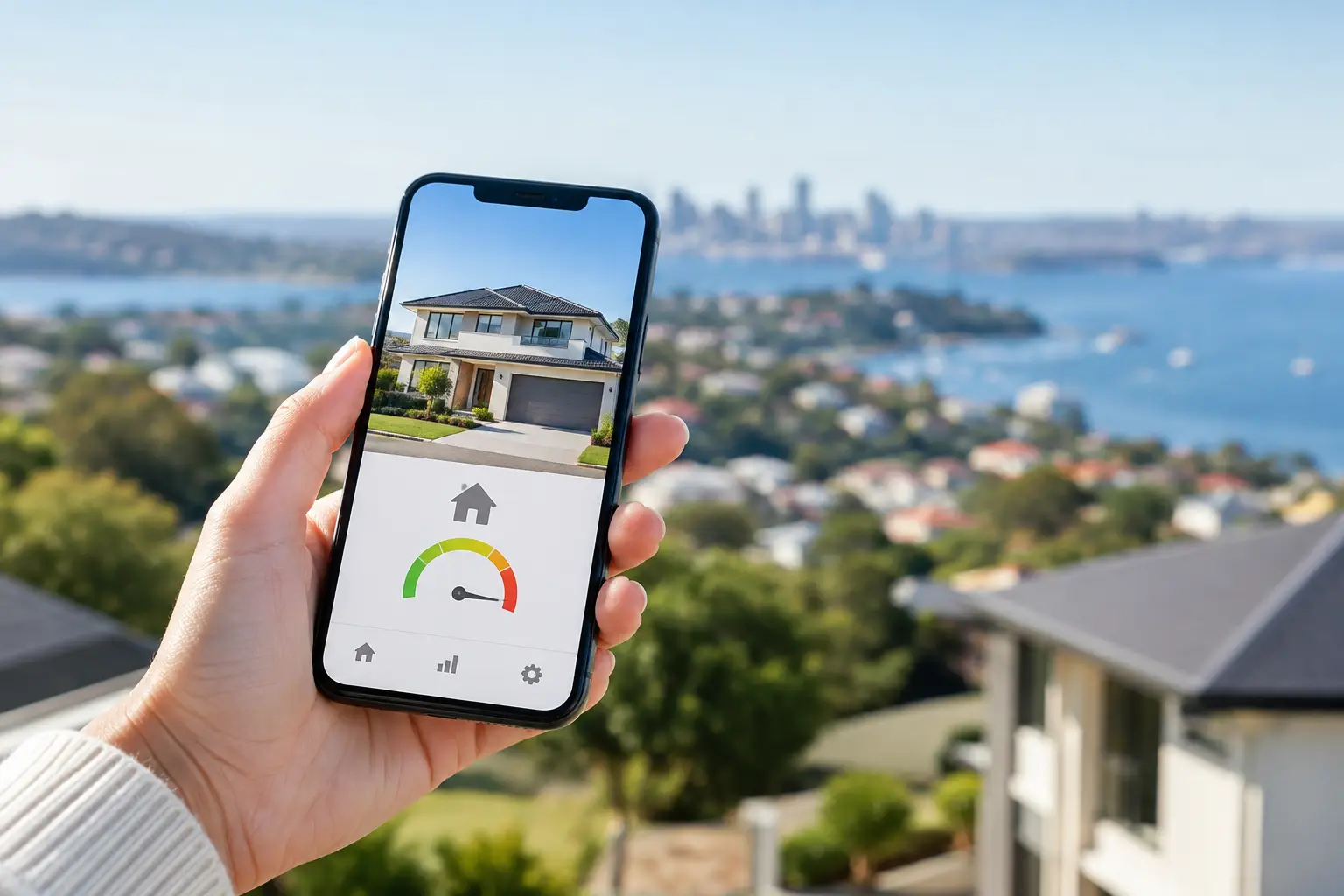
A figure on your mobile can be a useful starting point, but it should not set the reserve for your home. Home valuation apps give owners quick access to an estimated value using recent market data, property records and local sales. Used well, they help you understand the market before you speak with an agent. Used in isolation, they can miss the details that make property worth materially more than another.
For homeowners weighing up a sale, refinancing, buying an investment property or simply tracking their equity, the most useful question is not whether an app is right or wrong. It is whether the estimate is based on enough relevant information for the decision you need to make.
How home valuation apps calculate an estimate
Most home valuation apps use an automated valuation model, often called an AVM. The model analyses recorded sales and compares your address with properties that have similar characteristics, such as land size, dwelling type, bedroom count and location. It may also draw on broader suburb trends, historical sales results and estimated market movement since the last sale.
This approach is fast because it relies on data rather than a physical inspection. In established suburbs with many recent, comparable transactions, an app can provide a credible price range and a helpful view of how values have moved over time. It is particularly useful when you are researching several suburbs, checking what homes have sold for nearby, or deciding whether a move is financially realistic.
The estimate is not a formal valuation, however. A formal valuation is completed by a qualified valuer for a defined purpose, while an agent appraisal combines comparable sales with live buyer feedback and an assessment of your home's presentation, features and likely campaign strategy.
The data an app cannot see
An automated model does not walk through the front door. It cannot reliably judge natural light, ceiling heights, renovation quality, street appeal, noise at different times of day or whether the floorplan works for a growing family. These factors can shift buyer demand significantly.
It may also have limited visibility of features that are not consistently recorded in public data: a premium kitchen renovation, a pool, views, a flexible home office, high-end finishes or a separate studio. The same applies at the other end of the scale. Deferred maintenance, poor workmanship, drainage issues and an awkward layout can affect buyer appetite but may not appear in the inputs.
For prestige homes, architect-designed residences and tightly held lifestyle properties, the gap can be wider. There may be few genuine comparable sales, and the buyer pool can place a premium on privacy, aspect, acreage, waterfront access or a particular school catchment. Those are judgement calls as much as data points.
When are home valuation apps most accurate?
Home valuation apps tend to perform best when the property is conventional and the local market is active. Think of a three-bedroom townhouse in a well-traded metropolitan suburb, or a standard apartment in a large complex where similar dwellings have sold recently. The app has more evidence to work with, so the estimate is usually more useful as a market guide.
Accuracy becomes less certain when there are few recent sales, the property is unusual, or market conditions are changing quickly. Regional homes, new builds, off-the-plan apartments, homes on large blocks and properties with substantial renovations often need closer review. An estimate can also lag a sharp shift in buyer demand, whether values are rising or softening.
Check the date of the most relevant comparable sales, not just the app's current estimate. A sale from two years ago may carry little weight in a fast-moving market. A recent sale around the corner is more useful, provided the land, condition, style and location are genuinely comparable.
Use an app as a range, not a sale price
A single number can create false certainty. Property prices are negotiated in a live market, and the result depends on the quality of the campaign, the number of active buyers, timing and how your home compares buyers begin inspecting alternatives.
Treat an estimate as a working range. If several sources indicate a similar range, that is a reasonable signal to investigate further. If the estimates vary widely, it usually means the available data is incomplete or your property has characteristics that require local expertise.
Start by checking the basic property details. An incorrect bedroom count, land area or property type can skew the result. Then look at sold listings rather than asking prices. Asking prices show seller expectations; sold results show where buyers and sellers ultimately agreed.
On Leading Agents, homeowners can research recent local sales, track suburb activity and compare agents who understand the area. This gives the estimate more context and helps you move from a broad number to a realistic pricing conversation.
How to pressure-test your estimated value
Before relying on an app estimate, take an hour to do the work a model cannot do well. Review the most recent comparable sales within your immediate pocket of the suburb, ideally from the past three to six months. Look beyond bedroom numbers to compare land, parking, condition, views, orientation and any major improvements.
Pay attention to the sale method and result. A strong auction result with multiple bidders can sit above the likely result for a quieter private treaty campaign. Equally, a property sold off-market may not reflect the full level of buyer competition. Context matters.
You should also consider current competition. If several similar homes are for sale now, buyers have more choice. If stock is tight and well-presented homes are attracting strong inspection numbers, a previous sale may already be out of date. Local agents see this activity first-hand through enquiry, inspections, buyer feedback and offers.
For a clearer view, invite two or three experienced local agents to provide an appraisal. Ask each agent to explain their comparable sales, price range, recommended sale method and the buyers they expect to target. A confident appraisal should be evidence-led, not simply the highest number put forward to win your business.
App estimate, agent appraisal or formal valuation?
The right tool depends on what you are trying to do.
An app estimate suits early-stage research. It can help you monitor your likely equity position, shortlist suburbs, assess whether an upgrade may be possible or decide whether it is time to seek professional advice.
An agent appraisal is most useful when you are considering selling or leasing. A good local agent can account for presentation, buyer demand, competition and campaign strategy, then provide a practical price range based on relevant evidence.
A formal valuation may be required for lending, family law, deceased estates, SMSF matters or other financial and legal purposes. Your lender may arrange its own valuation when assessing a loan application, and that figure may differ from both an estimate and an expected sale price.
There is no contradiction in receiving different numbers. Each figure may be answering a different question, at a different point in the market, using different evidence.
Prepare your home before seeking an appraisal
If you are moving from research to a possible sale, give agents a complete picture. Keep a record of renovations, approvals, major repairs and upgrades, including dates and costs where available. Mention improvements that may not be obvious, such as insulation, solar panels, new drainage, upgraded wiring or council-approved additions.
Present the property as you would for a serious inspection. You do not need to spend heavily before an appraisal, but clean spaces, clear access and honest disclosure help an agent assess the home properly. They can then advise which improvements are worth making before launch and which are unlikely to return their cost.
The best next step is simple: use the estimate to form your questions, then test it against current local evidence and experienced advice. That puts you in control of the number before the market has a chance to decide it for you.